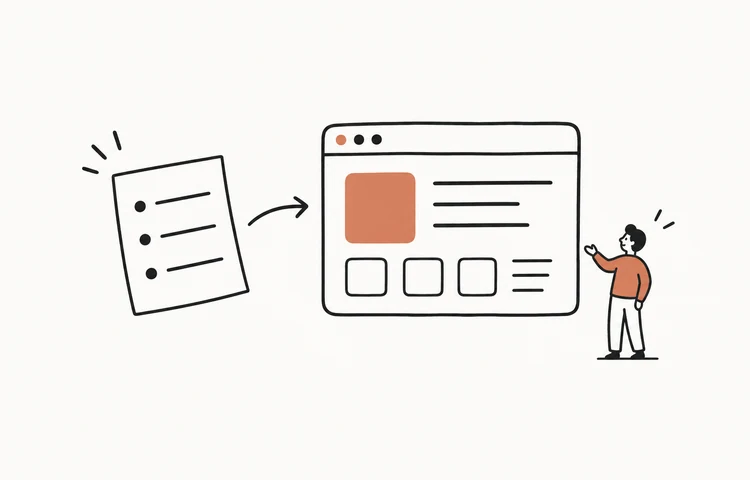
A useful app prototype template records the target user, the single workflow being tested, minimum screens, important empty, loading, error, and permission states, explicit exclusions, and the questions the prototype cannot answer. It is a review aid, not proof that the app is secure or production ready.
Build the right deliverable for app prototype template
Create a one-page brief covering user, decision, workflow, screens, states, exclusions, evidence, and open questions. A useful app prototype template records the target user, the single workflow being tested, minimum screens, important empty, loading, error, and permission states, explicit exclusions, and the questions the prototype cannot answer. It is a review aid, not proof that the app is secure or production ready.
- One user and one decision are named
- Every screen supports the workflow
- Unknowns are questions rather than assumptions
A worked example for app prototype template
A team-feedback prototype can cover joining one workspace, opening one shared preview, leaving one comment, and confirming it was saved. Billing, advanced roles, integrations, and production-scale guarantees remain explicitly out of scope.
Review app prototype template before relying on it
Review a one-page brief covering user, decision, workflow, screens, states, exclusions, evidence, and open questions against these conditions: One user and one decision are named; Every screen supports the workflow; Unknowns are questions rather than assumptions. A preview is not evidence of production security, compliance, or launch readiness.
- One user and one decision are named
- Every screen supports the workflow
- Unknowns are questions rather than assumptions
Use the evidence for app prototype template
The prototype brief should begin with the decision it is meant to inform. Name the person using the preview, the one workflow they will attempt, the evidence the team wants from the review, and the questions that remain outside the prototype. This prevents a visually broad demo from being mistaken for proof about demand, permissions, integrations, data durability, or production readiness.
- Hacker News: prototype-to-production breakpoints
- Reddit: nontechnical builders using AI
Keep app prototype template within its boundary
List screens only after the workflow is bounded. For each screen, record the normal state and the empty, loading, error, permission, and recovery states that matter to the decision. Mark billing, advanced roles, analytics, integrations, and scale as exclusions unless the prototype is explicitly testing them. An exclusion is a deliberate boundary, not an invitation to hide missing behavior.
- One user and one decision are named
- Every screen supports the workflow
- Unknowns are questions rather than assumptions
Hand off the app prototype template result
At review, ask the participant to complete the workflow without coaching and capture where the preview, wording, or state model creates uncertainty. Separate observations from proposed fixes. The handoff should contain the brief, current preview, decisions made, unresolved questions, and the owner of the next production or security assessment so that the prototype remains useful without overstating what it proves.
- a one-page brief covering user, decision, workflow, screens, states, exclusions, evidence, and open questions
- One user and one decision are named
- Every screen supports the workflow