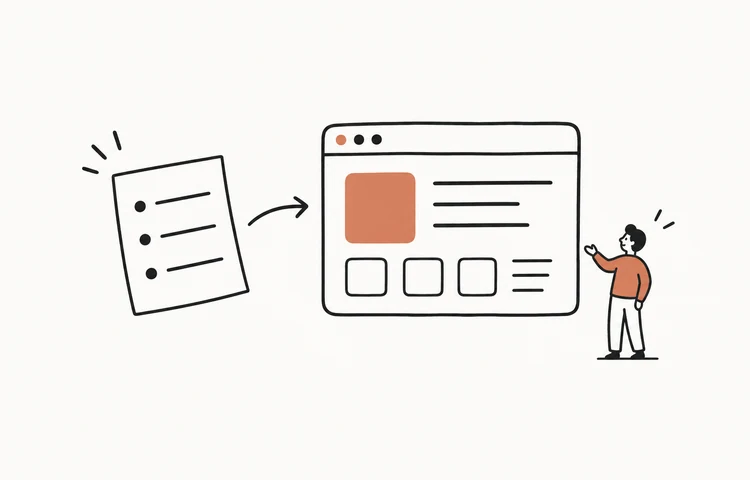
A small-app software requirements specification should name the product goal, users, core workflows, functional requirements, quality constraints, data boundaries, failure states, exclusions, dependencies, and acceptance evidence. Keep each requirement observable and trace it to a user need instead of writing a long feature wish list.
What this small-app SRS is for
A small-app software requirements specification should name the product goal, users, core workflows, functional requirements, quality constraints, data boundaries, failure states, exclusions, dependencies, and acceptance evidence. Keep each requirement observable and trace it to a user need instead of writing a long feature wish list.
Copyable SRS fields
Copy these fields into the team's document. Keep the labels even when a field is unknown, because an explicit question is safer than an invisible assumption.
Tag each requirement as proposed, confirmed, changed, or retired. Add the decision owner and the acceptance scenario that proves the requirement. When scope changes, create a new version and preserve the earlier decision trail so the team can distinguish an intentional change from accidental drift.
- Document owner, version, date, product goal, and non-goals
- Users, roles, core journeys, and functional requirements with stable IDs
- Data inputs, outputs, retention questions, permissions, and failure states
- Accessibility, performance, security-review, support, and operational constraints
- Dependencies, exclusions, acceptance evidence, unresolved questions, and approval record
A testable requirement example
For a shared-feedback app, REQ-04 can state who may open a private preview, which failure message appears, and how access is verified. Performance targets, data retention, and audit needs remain separate constraints rather than hidden assumptions.
Turn product conversation into requirements
Start with the user problem and decision the specification must support, then assign stable IDs to the smallest observable requirements. Separate functional behavior from quality constraints such as accessibility, security review, performance, retention, and support. Record dependencies and exclusions beside the requirements so reviewers do not mistake an omitted feature for an accidental gap.
Run a traceability exercise before approval. Pick each user need and identify the requirement IDs that satisfy it. Then pick every requirement and identify its acceptance evidence. A need with no requirement is a scope gap. A requirement with no need may be unnecessary. A requirement with no observable evidence is not ready for implementation review.
- Atlassian: product requirements template
- Reddit: nontechnical builders using AI
Keep architecture questions visible
A requirements document is not proof that the proposed implementation is correct or safe. Mark assumptions and unresolved architecture questions explicitly, avoid prescribing technology without a confirmed constraint, and keep sensitive data or credentials out of shared drafts. If a requirement cannot be observed or tested, rewrite it as a user-visible outcome or a review question.
Review and freeze the baseline
Review the document with the people responsible for product, design, engineering, and acceptance. Trace every requirement to a user need and every acceptance scenario back to a requirement ID. Freeze an approved version for the next preview, then record changes rather than silently rewriting the baseline when conversation or scope moves.
Limits of a written specification
A preview is not evidence of production security, compliance, or launch readiness.
- Every requirement has a stable ID
- Requirements describe observable behavior
- Constraints and exclusions are explicit
- Unknowns remain review questions