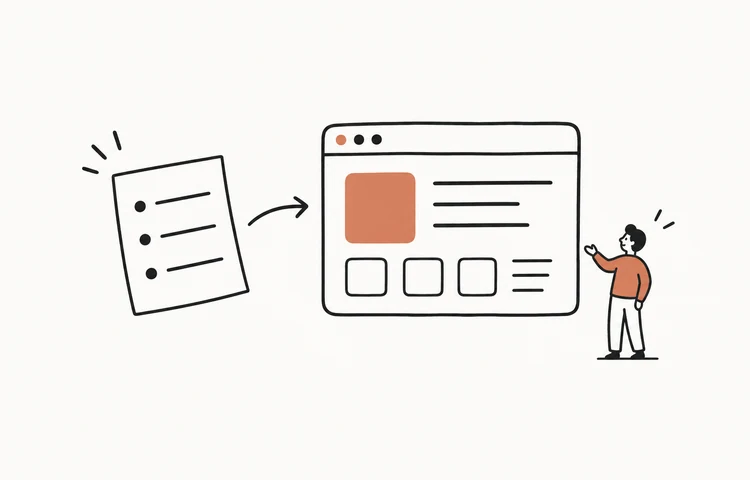
A user story names a real role, a desired action, and the value or outcome behind it. The familiar format is useful only when the role is specific, the need is not a disguised interface instruction, and the value explains why the work matters. Keep detailed states, constraints, and test evidence in linked acceptance criteria rather than cramming them into the story sentence.
Anchor each story in a user outcome
A user story names a real role, a desired action, and the value or outcome behind it. The familiar format is useful only when the role is specific, the need is not a disguised interface instruction, and the value explains why the work matters. Keep detailed states, constraints, and test evidence in linked acceptance criteria rather than cramming them into the story sentence.
Copyable story-and-evidence card
Use one card per need. Keep the story sentence concise, then give context, exclusions, questions, and acceptance evidence their own fields.
Read the example cards as patterns, then replace every role, context, need, and outcome with evidence from the real product conversation. Link the approved card to its acceptance scenarios and preview version. If the screen changes but the outcome does not, preserve the story and revise the criteria rather than rewriting history to match the latest interface.
- Story ID, role, context, need, outcome, source conversation, and owner
- Starting state, affected workflow, non-goals, dependency, and open question
- Acceptance scenario IDs, happy path, failure path, permission boundary, and recovery
- Preview version, review evidence, change decision, and approval date
- Outcome measure or follow-up question after release
Invitation-story worked example
Instead of As a user, I want a share button, write: As a workspace owner reviewing a prototype, I want to invite one named collaborator so that feedback stays tied to the same revision. Separate criteria then cover valid, expired, reused, and unauthorized invitation states.
Compare strong and weak story patterns
Compare stories by the decision they preserve. A useful account-creation story names who needs an account and what later outcome it enables. An invitation story distinguishes owner and invitee roles. A search story names what the person is trying to find and why. A recovery story explains what work or access must be regained. The examples are patterns for analysis, not ready-made scope for every app.
Test every story with four questions: would a different role change the behavior, is the need independent of the proposed interface, does the outcome explain why the work matters, and can linked criteria show success and failure? If not, return to the conversation. A grammatically perfect story can still describe the wrong user or preserve no meaningful decision.
- Atlassian: creating user stories
- Atlassian: acceptance criteria examples
Keep constraints out of the story sentence
Keep the story sentence short, then attach context and criteria. Record starting state, permissions, empty and error states, excluded roles, data questions, and observable success separately. This prevents the who-want-so-that format from becoming a long specification while still preserving the evidence required to review the generated preview.
Trace the story into a reviewed preview
Check the story against the actual user conversation. If the value is merely so I can use the feature, ask what outcome matters. If the role is everyone, identify who makes a different decision. Link the approved story and criteria to the preview revision. SayCraft supports that conversation but does not decide business priority or production readiness.
Limits of user-story examples
A preview is not evidence of production security, compliance, or launch readiness.
- The role is specific enough to affect behavior
- The action describes a user need rather than a UI control
- The value explains the intended outcome
- Acceptance evidence and exclusions are linked