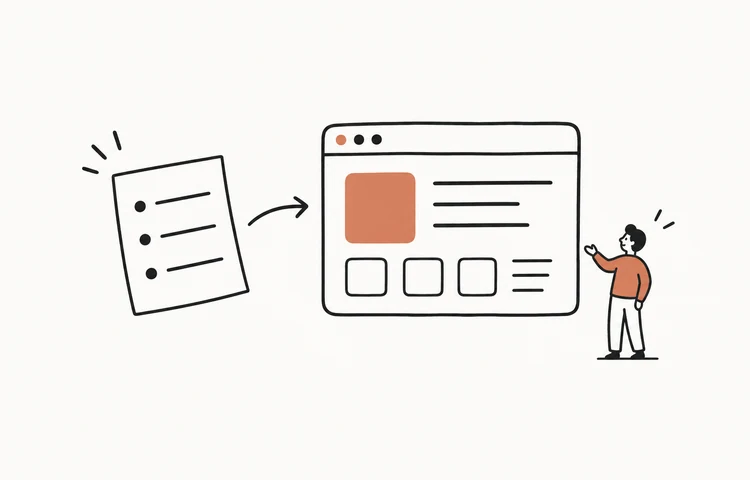
A software proposal should help a client or sponsor decide whether to proceed. Include an executive summary, the client's current problem, desired outcome, proposed approach, deliverables, scope and exclusions, milestones, responsibilities, assumptions, pricing, risks, acceptance method, and next step. A proposal frames the offer and decision but does not replace the governing agreement; a later PRD or SRS owns different product and system decisions.
Copy-and-paste software proposal template
Tailor the proposal to the reader's decision. A client buying a custom system needs confidence that you understand the workflow, boundaries, cost basis, and delivery risk. An internal sponsor needs the business outcome, resources, alternatives, and approval requested. Remove sections that do not affect the decision instead of filling them with boilerplate.
Use a descriptive title and put the client, proposer, version, date, and validity period in the header. If an estimate depends on discovery, say so visibly and describe what discovery will decide.
- Executive summary: problem, proposed outcome, high-level scope, investment, and requested decision
- Current situation: affected users, workflow, cost or risk, evidence, and constraints
- Proposed solution: the approach and why it fits the stated outcome
- Deliverables: tangible outputs with an acceptance method
- Scope and exclusions: included work, excluded work, and change-request boundary
- Plan and milestones: discovery, prototype, build, validation, launch, and handoff as applicable
- Responsibilities: client inputs, access, decisions, content, and provider obligations
- Pricing: amount or range, payment schedule, taxes, expenses, and estimate assumptions
- Risks and assumptions: uncertainty, impact, mitigation, and decision owner
- Next step: approval method, deadline, kickoff condition, and contact
Illustrative worked example for clinic reminder software
Executive summary: We propose a six-week pilot that lets one clinic schedule appointment reminders and see delivery status. The goal is to reduce manual reminder work and missed communication while keeping clinical records outside the application. The pilot investment is a fixed discovery and prototype phase followed by a build range confirmed after workflow approval.
Deliverables: a receptionist web interface, consent-aware patient contact record, one-time SMS scheduling, cancellation, delivery status, admin access, deployment guide, and acceptance session. Exclusions: clinical notes, insurance data, two-way messaging, recurring marketing, native mobile apps, data migration, and support after the stated handoff period.
Milestones: week one workflow discovery and acceptance map; week two interactive prototype; weeks three through five implementation and testing; week six clinic acceptance, deployment, and handoff. Client responsibilities include naming one decision owner, providing approved message wording, confirming consent rules with counsel, and returning milestone feedback within two business days.
The prices in this fictional example are included only to demonstrate the format, not as market quotes. Discovery and prototype are fixed at $4,000. Build is estimated at $12,000 to $18,000 because provider onboarding and clinic authorization rules remain open. The proposal expires after 30 days. Changes to excluded scope require a written estimate and approval.
Define scope so the price means something
A price without a delivery boundary is not comparable. Name the users, platforms, workflows, integrations, data migration, content, environments, testing, deployment, training, documentation, warranty, and ongoing support included. Put meaningful exclusions beside the included scope instead of hiding them at the end.
For uncertain work, use a range tied to explicit assumptions or sell a bounded discovery phase that produces a revised estimate. Do not disguise unresolved scope as a guaranteed fixed price. Explain which changes affect schedule or cost and how both parties approve them.
- Give each deliverable an observable acceptance method
- Separate third-party fees from your own price
- State whether taxes, travel, content, and data cleanup are included
- Name client response deadlines that protect the schedule
- Describe support period, response expectations, and handoff artifacts
Proposal, RFP, contract, PRD, and SRS are not synonyms
An RFP asks potential providers to submit comparable offers. A proposal is the provider's or project owner's recommended offer. The governing agreement records the parties' legal obligations; formation and signature requirements vary by jurisdiction. A PRD defines product purpose and requirements, while an SRS specifies detailed software behavior and quality constraints.
A proposal may summarize all of these areas, but it should link to the canonical owner rather than copy changing requirements or legal terms. This prevents a sales document, build plan, and contract from silently disagreeing.
Use a working prototype to resolve proposal uncertainty
When stakeholders interpret the same scope sentence differently, a working draft can expose the disagreement before pricing is locked. SayCraft turns a product meeting into a running web-app preview while the conversation happens, and the replay preserves how the draft changed.
Use that preview to confirm journeys, exclusions, and acceptance expectations, then revise the proposal. It is not automatically the contracted deliverable or a production-ready system. State its role, version, and access terms in the proposal if the client will rely on it.