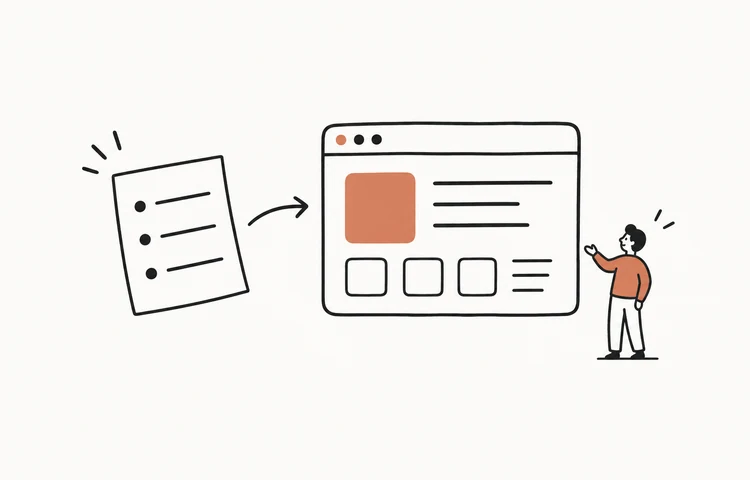
If you write software, you've probably felt the difference between an AI that suggests and an AI that acts. The first kind hands you a snippet and wishes you luck. The second kind opens your project, makes the change, runs the tests, and tells you what happened. Claude Code, Anthropic's agentic coding tool, is firmly the second kind — and that shift is a genuinely big deal.
This is a clear, honest guide to what Claude Code is, who it's for, and why so many developers describe it as a real leap rather than another autocomplete. No hype, no benchmarks that'll be stale by next quarter — just the shape of the thing.
What is Claude Code?
Claude Code is an agentic AI coding tool that lives in your terminal. You describe what you want in plain language — “add rate limiting to the login route,” “figure out why this test is flaky,” “rename this concept across the project” — and it goes and does it. It reads your code, forms a plan, edits the files, runs commands, checks the results, and reports back. You review and approve along the way.
The key word is agentic. A lot of AI coding help is reactive: it waits for you to point at a line and asks “what about this?” Claude Code is the opposite — you hand it a goal and it takes the steps to reach it. It can explore an unfamiliar codebase, decide which files matter, and make a coherent change that spans many of them at once.
What can Claude Code do?
Claude Code can inspect an unfamiliar repository, trace how a feature works, plan a change, edit several files, run shell commands and tests, read the failures, and iterate on the result. That makes it useful for refactors, bug diagnosis, migrations, test coverage, code review, and routine implementation work. Its advantage is not that it writes one clever snippet; it can close the loop against the actual project.
How Claude Code works, step by step
- Start inside a repository. The project files, git history, and available commands become the working context.
- Give it an outcome. A bounded request such as fixing one failing flow works better than “improve the app.”
- Let it inspect before editing. It traces relevant files and forms a plan instead of guessing from one snippet.
- Review the actual diff and evidence. Read the changed files and the test or build output; an agent saying “done” is not verification.
- Commit only the change you understand. The developer remains responsible for security, behavior, and deployment.
What makes it feel like a leap
Plenty of tools promise “AI in your editor.” What people love about Claude Code is that it actually operates on your project instead of describing what you could do. A few things stand out:
- It understands the whole codebase. It doesn't just see the file in front of you — it can trace how pieces connect across the project, so a change in one place accounts for the others it touches.
- It makes real, multi-file edits. Refactors that would mean hunting through a dozen files become one instruction. It does the tedious, error-prone tracing for you.
- It runs commands and tests. It can execute the build, run the test suite, read the failures, and fix them — closing the loop the way a developer would, instead of stopping at “here's some code, good luck.”
- It works alongside you. You stay in the loop: it proposes, you approve, you steer. It's a collaborator that does the typing and the legwork, not a black box you have to trust blindly.
That combination — sees everything, edits everything, runs everything, checks its own work — is why it feels less like autocomplete and more like a capable teammate who happens to be very fast.
How it's different from a chatbot
The honest comparison is with a chat window. A chatbot like ChatGPT is brilliant for questions and explanations, but the loop runs through you: you describe the problem, it answers, you copy the code into your editor, you run it, you paste the error back, repeat. You are the integration layer.
Claude Code removes that copy-paste tax. It already has your project; it opens the actual files, makes the edit in place, runs the command itself, and reads the output without you relaying it. The conversation stops being “tell me what to do” and becomes “do it, and show me.” This is the same shift behind the broader vibe coding movement — describe the outcome, let the machine implement it — applied right inside a real engineering workflow.
Who Claude Code is for
Claude Code is a developer tool, and that's a feature, not a hedge. It assumes you're comfortable in a terminal, you use git, and you have a codebase it can work in. For that audience it's a gift. It's especially strong at:
- Large refactors — renaming concepts, restructuring modules, or migrating patterns across many files in one pass.
- Debugging — reproducing an issue, tracing it through the code, and proposing a fix it can verify by running the tests.
- Writing tests — generating coverage for existing code and iterating until the suite is green.
- Onboarding to unfamiliar code — asking it to explain how a subsystem works, then making a safe first change with its help.
Technical teams love that it scales the boring-but-careful work — the cross-file edits, the test loops, the “where is this even used” archaeology — so the humans spend more time on decisions and design.
Claude Code for non-coders?
A non-coder can launch Claude Code, but that does not make it a no-code tool. The hard part is judging what it changed: whether an authorization check is missing, a migration is safe, a dependency is appropriate, or a passing test actually covers the risk. If you cannot review those decisions, use a visual AI app builder for product exploration and bring in a developer before the result handles real users or data.
Claude Code vs AI app builders
Claude Code starts with a repository and treats code, commands, tests, and git as the workspace. AI app builders start with a prompt or conversation and treat the running preview as the workspace. Developers maintaining a production system usually want the first. Product managers and non-coders validating a workflow usually want the second. The AI app builder comparison dataset lays out that boundary, while our production reliability write-up covers what must surround an agent before its code is safe to ship.
The honest catch — and a different door
Here's the honest part: all of this assumes you code. Claude Code is glorious if you live in a terminal, but it expects a shell, a git repo, and a working knowledge of the codebase it's editing. If that's not you, it's the wrong door — not because the magic isn't real, but because the room is set up for developers.
The good news is that the magic itself — describe what you want and watch it get built — isn't locked behind the terminal. If you don't code, you can get that same feeling a different way. That's what we built SayCraft for: you talk through what you want — alone or in a live meeting with your team — and AI builds a working web app with a live preview URL you can open and share. No terminal, no code, no prompt syntax to learn. Just talk, and watch it appear.
This isn't a competition. Claude Code and SayCraft are two doors into the same room: the room where you say what you want and software gets built. One door is for people who love the terminal; the other is for everyone else. If you're curious which build-by-talking and prompt-to-app tools fit which kind of person, we compared them in our roundup of the best vibe coding tools, and you can see how the no-terminal path works on our AI app builder page.
The bottom line
Claude Code earns the praise. It's an agentic coding tool that reads your whole project, plans, edits across files, runs the tests, and works with you to get a real change shipped — the difference between an AI that suggests and one that acts. If you're a developer, it's well worth your time.
For current installation, authentication, and command details, use Anthropic's official Claude Code setup guide and CLI reference. Features and access terms change, so those pages outrank any static roundup.
And if you're not — if “terminal” and “git” aren't your world — the same describe-it-and-watch-it-build feeling is one conversation away. You just talk instead of type.
Frequently asked questions
What is Claude Code?
Claude Code is Anthropic's agentic coding tool that runs in your terminal. Instead of only suggesting snippets, it reads your whole project, plans a change, edits multiple files, runs commands and tests, and shows you the result. You stay in control and approve what it does, but it acts on the codebase rather than just talking about it.
Who is Claude Code for?
It's built for developers and technical teams who live in the terminal — people comfortable with a shell, git, and a real codebase. It shines on refactors, debugging across many files, writing tests, and onboarding to unfamiliar code, because it can explore the project on its own before acting.
How is Claude Code different from a chatbot like ChatGPT?
A chatbot answers in a window; you copy code back and forth yourself. Claude Code is agentic — it works directly in your project, opens and edits the actual files, runs the build or tests, and reacts to the output. It acts on your environment instead of just describing what you could do.
Do I need to know how to code to use Claude Code?
Honestly, yes — Claude Code is a developer tool that assumes you're comfortable with a terminal, git, and a codebase. If you don't code, you can still get the same describe-it-and-watch-it-get-built feeling with a build-by-talking tool like SayCraft: you talk through what you want and AI builds a working web app with a live preview URL, no terminal required.
What can Claude Code do?
Claude Code can explore a repository, explain unfamiliar code, plan a change, edit multiple files, run shell commands and tests, debug failures, write tests, review diffs, and help with refactors or migrations. It is most useful when the task lives in a real codebase and the user can review the result.
Can a non-coder use Claude Code?
A non-coder can technically run it, but cannot safely evaluate many of the changes it makes. Claude Code assumes terminal, git, dependency, test, and deployment knowledge. Non-coders are usually better served by an AI app builder with a visual preview, then involving a developer before production.
How is Claude Code different from an AI app builder?
Claude Code works inside a repository and gives a developer direct control over code, commands, and tests. An AI app builder starts from a prompt or conversation and optimizes for a visual, running result with less setup. Use Claude Code when maintainable code is the primary workspace; use an app builder when product exploration and a fast shared preview are the primary workflow.